
# CSR Communication Plans: A Guide for Businesses
Every business, big or small, has a role to play in making the world a better place. This isn’t just about charity; it’s about corporate Social Responsibility (CSR). CSR is a company’s commitment to managing its social, environmental, and economic impact. But simply doing good isn’t enough. You need to tell your story, and that’s where a solid CSR communication plan comes in.
A good CSR communication plan isn’t a one-and-done deal. It’s a strategic, ongoing effort to share your company’s positive impact with the world. This helps you build trust with customers, attract and retain top talent, and even boost your bottom line. In this article, we’ll dive into what a CSR communication plan is, why it’s so important, and how to create one that resonates with your audience.
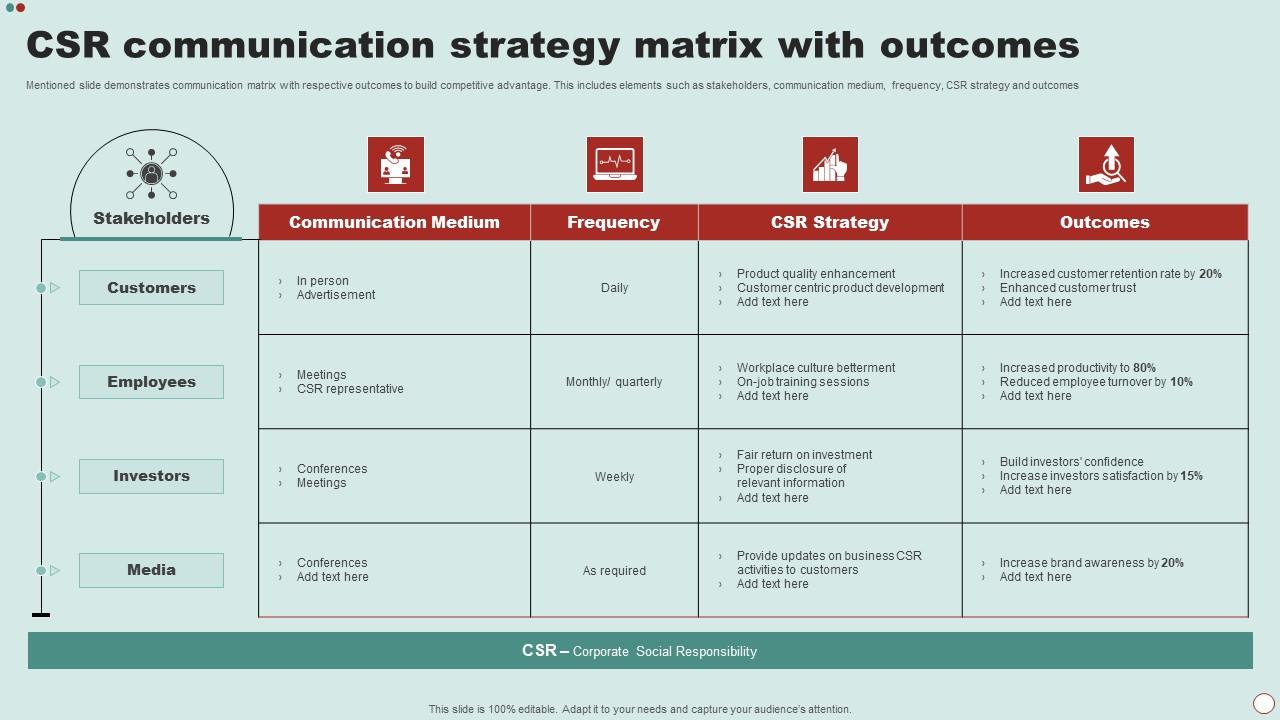
What is CSR Communication?
At its core, CSR communication is the process of sharing information about your company’s social and environmental initiatives. It’s about being transparent and authentic, showing stakeholders—customers, employees, investors, and the community—that you’re not just in it for the profit. You’re also committed to making a difference.
This isn’t just about marketing. While it certainly has a marketing component, a good CSR communication plan is rooted in your company’s values and actions. It’s about connecting your brand’s purpose with your positive impact. Think of it as a conversation, not a broadcast. You’re inviting your audience to be part of your journey, celebrating successes, and being honest about challenges.
Authentic: It must reflect your company’s true values and actions. Don’t greenwash or make claims you can’t back up.
A well-executed plan can turn your CSR efforts from a simple “feel-good” initiative into a powerful tool for brand building and stakeholder engagement.
Why Is a CSR Communication Plan Crucial?
You might think that your good deeds should speak for themselves, but in today’s crowded marketplace, that’s often not the case. A strategic CSR communication plan is essential for several reasons:
1. Building Trust and Reputation
In an age of skepticism, trust is a valuable currency. Consumers are increasingly wary of companies that seem to be all about profit. By openly sharing your CSR efforts, you show that you’re a responsible corporate citizen. This builds trust and enhances your reputation, making customers more likely to choose your brand over a competitor’s. A strong reputation can also protect you during a crisis, as people are more likely to give you the benefit of the doubt.
2. Attracting and Retaining Talent
Top talent, especially millennials and Gen Z, want to work for companies that align with their values. They’re not just looking for a paycheck; they’re looking for purpose. A well-communicated CSR strategy can be a powerful recruitment and retention tool. It shows prospective employees that your company is a place where they can make a difference, not just a living. When your employees are proud of your company’s social and environmental impact, they become your best brand ambassadors.
3. Increasing Customer Loyalty
When customers feel a connection to your brand’s purpose, they’re more likely to become loyal advocates. A study by Nielsen found that 66% of global consumers are willing to pay more for sustainable brands. By communicating your CSR initiatives, you’re giving customers a reason to choose you beyond price or convenience. You’re creating an emotional bond that can lead to long-term loyalty and repeat business.
4. Enhancing Brand Visibility and Differentiation
In a saturated market, every little bit of differentiation helps. Your CSR efforts can be a unique selling proposition. When you communicate your commitment to a specific cause, you stand out from the crowd. For example, if you’re a clothing company that uses recycled materials and ethically sourced labor, shouting that from the rooftops can attract a whole new segment of customers who value sustainability.
The Step-by-Step Guide to Creating Your CSR Communication Plan
Creating a CSR communication plan might seem daunting, but by breaking it down into manageable steps, you can create a strategy that’s both effective and authentic.
Step 1: Define Your CSR Strategy First
Before you can communicate your CSR efforts, you need to know what they are. This isn’t just about picking a cause you like. It’s about finding a cause that aligns with your brand’s values, mission, and business operations. For a coffee company, this might be fair trade practices. For a tech company, it could be bridging the digital divide in underserved communities. Your CSR initiatives should be a natural extension of who you are as a company.
Ask yourself:
What social or environmental issues are most relevant to our industry?
Once you’ve defined your CSR strategy, you can move on to the communication part.
Step 2: Identify Your Target Audience
Who are you trying to reach with your message? Your CSR communication plan should be tailored to different groups of people.
Customers: They want to know that their purchases are supporting a good cause.
By understanding what each group cares about, you can craft messages that resonate with their specific interests.
Step 3: Craft Your Key Messages
Your key messages are the core of your communication. They should be clear, concise, and compelling. Think of them as the soundbites you want people to remember.
Your messages should:
Explain your “why”: Why are you committed to this cause?
For example, a key message for a sustainable fashion brand might be: “We’re not just making clothes; we’re creating a sustainable future, one thread at a time.”
Step 4: Choose Your Communication Channels
You have a story to tell, but where will you tell it? A multichannel approach is usually best, but you should focus on the platforms where your target audience spends their time.
Your Website: Create a dedicated CSR section or “Impact” page where you can house all your information, reports, and stories. This is your home base.
Best Practices for Authentic CSR Communication
Once you have your plan in place, it’s all about execution. Here are some best practices to ensure your communication is authentic and effective.
1. Be Transparent and Honest
This is the golden rule of CSR communication. Don’t hide the challenges. If you’re working towards a goal and haven’t met it yet, say so. Explain what you’re doing to get there. This level of transparency builds incredible trust. Greenwashing, or making false or misleading claims about your environmental practices, is a huge risk and can severely damage your reputation.
2. Tell Stories, Don’t Just List Facts
People connect with stories, not data points. Instead of just saying you donated to a charity, tell the story of a person or community that was helped by that donation. Share videos, photos, and testimonials. Let the people you’ve helped be the heroes of your story. This makes your impact tangible and emotional.
3. Involve Your Employees
Your employees are your best advocates. Involve them in your CSR initiatives from the beginning. Let them vote on which causes to support, organize volunteer events, and share their experiences. When employees feel connected to your company’s purpose, their enthusiasm is infectious and makes your communication efforts much more credible.
4. Measure and Report Your Impact
Numbers speak volumes. Set clear, measurable goals for your CSR initiatives and report on your progress regularly. Use a simple framework like “We will reduce our carbon footprint by X% by 2030” and then share updates on how you’re doing. This not only shows you’re serious but also holds you accountable.
5. Create a Dedicated Content Hub
On your website, create a dedicated hub for all your CSR-related content. This could be a blog, a dedicated page, or a section of your annual report. This makes it easy for stakeholders to find all the information they need in one place. Include articles, videos, reports, and testimonials. This demonstrates your commitment and provides a rich resource for anyone who wants to learn more.
Common Mistakes to Avoid
Even with a great plan, it’s easy to make mistakes. Be mindful of these common pitfalls:
Greenwashing: As mentioned before, this is the cardinal sin of CSR communication. Don’t make claims you can’t prove.
The Future of CSR Communication
As consumers become more socially and environmentally aware, the importance of CSR communication will only grow. The future is about integrated CSR, where social responsibility isn’t a separate department but is woven into the very fabric of your business. Communication will become even more transparent, interactive, and data-driven.
Technologies like blockchain are already being used to track supply chains and prove ethical sourcing. Artificial intelligence can help analyze data to measure social impact more accurately. The lines between business, social responsibility, and communication are blurring, creating a new era of purpose-driven brands.
By creating a well-thought-out CSR communication plan, you’re not just getting ahead of the curve; you’re building a more resilient, reputable, and successful business for the long haul. It’s a win-win for your business and for the world. So, start crafting your story and share your positive impact today.


